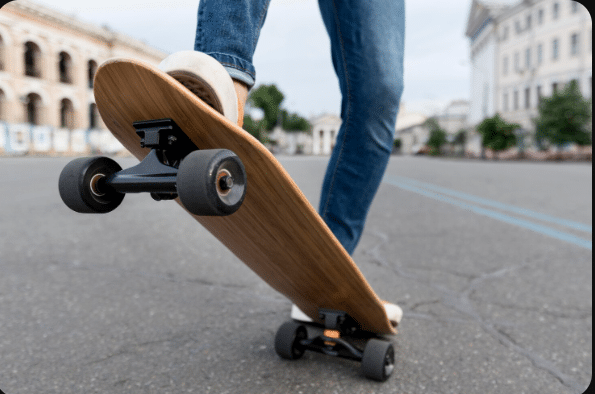
Introduction
Every skater knows that the board beneath their feet is more than just a piece of wood. It’s an extension of their body — the bridge between imagination and motion. Every flip, grind, or drop-in depends on one key component: the skateboard deck. While most riders focus on tricks and balance, few stop to think about what really goes into building that perfect board. Behind the smooth curves, vibrant graphics, and satisfying “pop” lies decades of skateboard deck technology — a fusion of engineering, material science, and creative innovation that transforms a simple plank into a high-performance masterpiece.
In this guide, we’ll dive deep into the tech behind the trick — exploring how skateboard decks are made, what materials shape their performance, and how modern manufacturing continues to redefine skate culture.
Understanding the Anatomy of a Skateboard Deck
Before we can appreciate modern innovation, we need to understand the foundation. Every skateboard deck, regardless of brand or price, follows the same core structure. But small variations in shape, curve, and construction make all the difference.
Ply Layers — The Strength Within
The soul of a skateboard lies in its plies. A standard deck is made of seven thin layers of North American maple, each glued and pressed together. This process gives the deck a balance between stiffness and flexibility — crucial for both control and pop.
Maple’s tight grain structure provides strength without unnecessary weight. Over time, manufacturers experimented with more plies (8- or 9-ply decks for extra durability) or fewer (6-ply for lighter performance). Yet the classic 7-ply remains the industry benchmark — the perfect middle ground between strength and feel.
Concave — The Invisible Control System
The concave is the subtle curve that runs across the deck’s width. It might seem like a design flourish, but it’s essential for control. The concave locks your feet into the board, giving you leverage for flips, turns, and aerial control. Decks can have mellow, medium, or steep concaves, each altering how the skateboard reacts underfoot. A deeper concave provides more responsiveness for technical tricks, while a mellow one favors comfort and cruising.
Kicktail and Nose — Launch Pads for Tricks
The upward curves at each end of the deck — known as the kicktail and nose — are what make ollies, kickflips, and manuals possible. The tail is usually steeper for stronger pops, while the nose tends to be slightly longer and shallower. This shape variation gives skaters better balance when switching stances or performing advanced maneuvers.
The Materials Revolution
While maple remains the foundation of skate deck design, innovation has never stopped. As skating grew more extreme, so did the need for boards that could handle higher impacts, last longer, and stay lighter. This quest for perfection sparked a wave of material experimentation.
The Maple Era — Tried and True
For decades, North American hard rock maple has been the backbone of skateboarding. It’s resilient, flexible, and consistent. The traditional 7-ply deck became the global standard because it offered reliability. Each maple veneer layer is carefully oriented to counteract the grain of the one below, providing a balance between rigidity and elasticity. This cross-grain lamination is what gives decks their snap — the energy return you feel when popping a trick.
The Rise of Composite Materials
Skateboard Deck Technology engineers began asking a bold question: could technology make a better board than pure wood?
Fiberglass was the first big step forward. When layered between plies, it added tensile strength without adding much weight. Decks reinforced with fiberglass maintain their shape longer, meaning consistent pop over time.
Then came carbon fiber — the superhero of materials. Lighter than aluminum but stronger than steel, carbon fiber revolutionized deck durability. Some companies incorporated carbon fiber layers or discs near high-stress zones, like the truck mounts, to prevent pressure cracks. The result? Boards that resist snapping under the heaviest landings.
Bamboo entered the scene as a sustainable alternative. It’s lighter and more flexible than maple, providing a unique springy ride. While pure bamboo decks can feel too soft for hardcore street skating, hybrid bamboo-maple combinations offer the best of both worlds — strength, sustainability, and style.
The Hybrid Era
Today’s top-tier decks often mix materials maple, carbon fiber, fiberglass, and bamboo — to achieve specific performance goals. Some designs even include Kevlar strands for impact resistance. By experimenting with these composites, manufacturers can fine-tune how a deck feels under different conditions from technical street skating to big-air vert sessions.
Crafting the Perfect Deck: Modern Manufacturing Techniques
The journey from raw veneer to finished deck involves precision, patience, and advanced technology. Each phase pressing, curing, cutting, and finishing — contributes to the final product’s performance.
The Pressing Process
Once veneers are glued together, they’re pressed into molds that define the deck’s concave shape. There are two major pressing methods:
Cold Pressing: Used by many high-end brands, this method involves applying pressure without heat, allowing the adhesive to cure slowly. The result is a stronger bond and more consistent shape retention. Cold pressing reduces warping and produces a natural feel underfoot.
Hot Pressing: Faster and more efficient for mass production. Heat speeds up curing, allowing companies to produce more decks per day. However, it can sometimes create subtle inconsistencies between batches.
Some manufacturers go a step further with individual pressing, where each deck is molded separately instead of stacking multiple blanks together. This ensures that every board comes out identical in shape, concave, and flex.
Glue and Bonding
Modern adhesives are a marvel of chemistry. Early decks used industrial wood glue; today, epoxy-based resins and water-resistant adhesives ensure plies don’t separate, even under extreme humidity. Some eco-conscious companies are exploring plant-based resins, offering greener alternatives without compromising performance.
Shaping and Finishing
After pressing, decks are cut using CNC (Computer Numerical Control) machines for perfect accuracy. Edges are sanded smooth, and mounting holes are drilled with laser precision. The surface is then sealed to protect against moisture before graphics are applied.
Impact-Resistant Technologies
Skateboard Deck Technology is tough on both the rider and the board. To address wear and breakage, companies developed impact-resistant features. Reinforced layers, carbon fiber discs, and polymer bumpers strengthen the deck’s weakest spots — around truck holes and kicktails.
Some boards now use impact-support cores, small layers of high-density foam or plastic that absorb shock during heavy landings. This innovation keeps decks from snapping while maintaining a natural wood feel. The result? More sessions per board and fewer replacements.
Graphics: Art Meets Engineering
No part of skateboarding is as visually expressive as deck art. A skateboard’s underside is a rolling canvas, reflecting individuality and subculture. Over the years, printing technology has evolved to match the artistry.
In the early days, decks used screen printing, a manual process with vivid but less durable results. Today, heat transfer printing dominates. This technique uses pressure and heat to fuse the graphic directly into the deck’s surface, resulting in richer colors and longer-lasting designs. The finish resists scratching and fading, even after countless grinds.
Beyond aesthetics, graphics now serve branding and storytelling. Skaters choose decks that represent their identity whether that’s bold street rebellion, minimalist design, or nostalgic throwback art.
The Performance Payoff
So what do all these technical details mean when you step on the board? The advances in materials and construction directly influence how the deck behaves under your feet.
Pop That Lasts
A board’s “pop” — the spring it gives when you snap the tail — is its lifeblood. With carbon fiber reinforcements and improved glue technology, modern decks retain their pop longer. Even after months of heavy skating, they maintain the responsiveness that older wooden boards used to lose in weeks.
Lightweight Precision
A lighter deck means easier flips, faster rotations, and less fatigue. Using bamboo or hybrid materials, manufacturers have cut weight without sacrificing strength. Skaters performing complex tricks notice the difference immediately faster flicks, smoother transitions, and better balance in the air.
Durability You Can Feel
No one enjoys the sound of a board snapping mid-session. Impact-resistant layers and hybrid composites have drastically reduced that risk. The longevity of today’s decks allows skaters to focus on progression, not replacement.
Consistent Feel
Thanks to precision pressing and CNC shaping, every board from a specific mold feels identical. That consistency allows skaters to switch boards seamlessly without adjusting their technique an essential advantage for professionals.
Sustainability and the Future of Deck Technology
As innovation continues, so does the responsibility toward the planet. Skate companies are increasingly aware of their environmental footprint. Maple forests take decades to mature, so many brands are shifting toward sustainable sourcing and eco-friendly materials.
Bamboo, as mentioned earlier, grows rapidly and regenerates naturally, making it one of the most sustainable alternatives. Some brands also experiment with recycled wood veneers, organic glues, and non-toxic finishes.
There’s also a push for modular decks — boards with replaceable tail sections or swappable layers, reducing waste and extending lifespan. Others are developing biodegradable composites and carbon-neutral manufacturing processes.
Beyond materials, technology is taking a futuristic leap. The idea of smart decks is gaining traction — boards embedded with sensors that measure air time, impact force, and even trick rotation data. Imagine connecting your board to an app that tracks your sessions, helping you analyze technique and progression in real time.
The Engineering Behind Comfort and Control
While tricks grab the spotlight, comfort determines how long you stay on your board. Advanced deck design considers subtle ergonomics the way your foot arches, the angle of your stance, and how weight shifts across the deck.
Some brands experiment with asymmetric shapes, where the nose and tail differ slightly in width and angle to suit modern skating styles better. Others use micro-concaves that fine-tune grip and balance for different terrains.
These design details are born from collaboration between skaters and engineers. The feedback loop between riders and designers drives constant improvement. Every failed trick teaches something new about physics, balance, and the human body — insights that feed back into the next generation of boards.
Cultural Impact: Technology Meets Identity
Skateboard Deck Technology are more than equipment they’re cultural symbols. Each era of deck technology reflects its time. In the 1970s, flat planks mirrored the raw beginnings of skateboarding. The 1980s introduced wider decks for vert ramps. The 1990s brought narrow, concave designs for technical street skating.
Now, in the 21st century, innovation goes hand-in-hand with sustainability and self-expression. Decks are not just tools for tricks; they’re statements of individuality and awareness. Technology hasn’t distanced skateboarding from its roots — it’s amplified them, allowing skaters to ride longer, go higher, and express more.
Choosing the Right Deck for You
Understanding Skateboard Deck Technology helps you make smarter choices. Consider your riding style before picking a deck:
- Street skaters should look for lighter decks with steep concave for quick flips.
- Vert or bowl riders benefit from wider, more stable boards.
- Cruisers and longboarders may prefer bamboo or hybrid decks for flexibility and comfort.
Don’t just choose a board for its graphic — feel its flex, weight, and balance. The right deck should feel like an extension of you, not a piece of equipment to control.
Conclusion
From the first press of maple plies to futuristic smart materials, skateboard deck technology has come a long way. The tech behind the trick is a blend of science, artistry, and passion — the invisible engine that makes every ollie, flip, and grind possible.
Innovation in decks mirrors the spirit of skateboarding itself: always evolving, always pushing boundaries. Whether you’re a beginner learning to balance or a pro perfecting your next trick, the deck beneath your feet carries decades of innovation and culture.
So next time you land that perfect trick, take a second to appreciate the engineering that made it possible a fusion of wood, fiber, and human creativity, all working together to keep you rolling forward.